


We Will Miss the ChatGPT Flyer
People are properly annoyed about AI posters made by small businesses. For thirty years the alternative was Comic Sans on a sheet of A4, and nobody minded that.
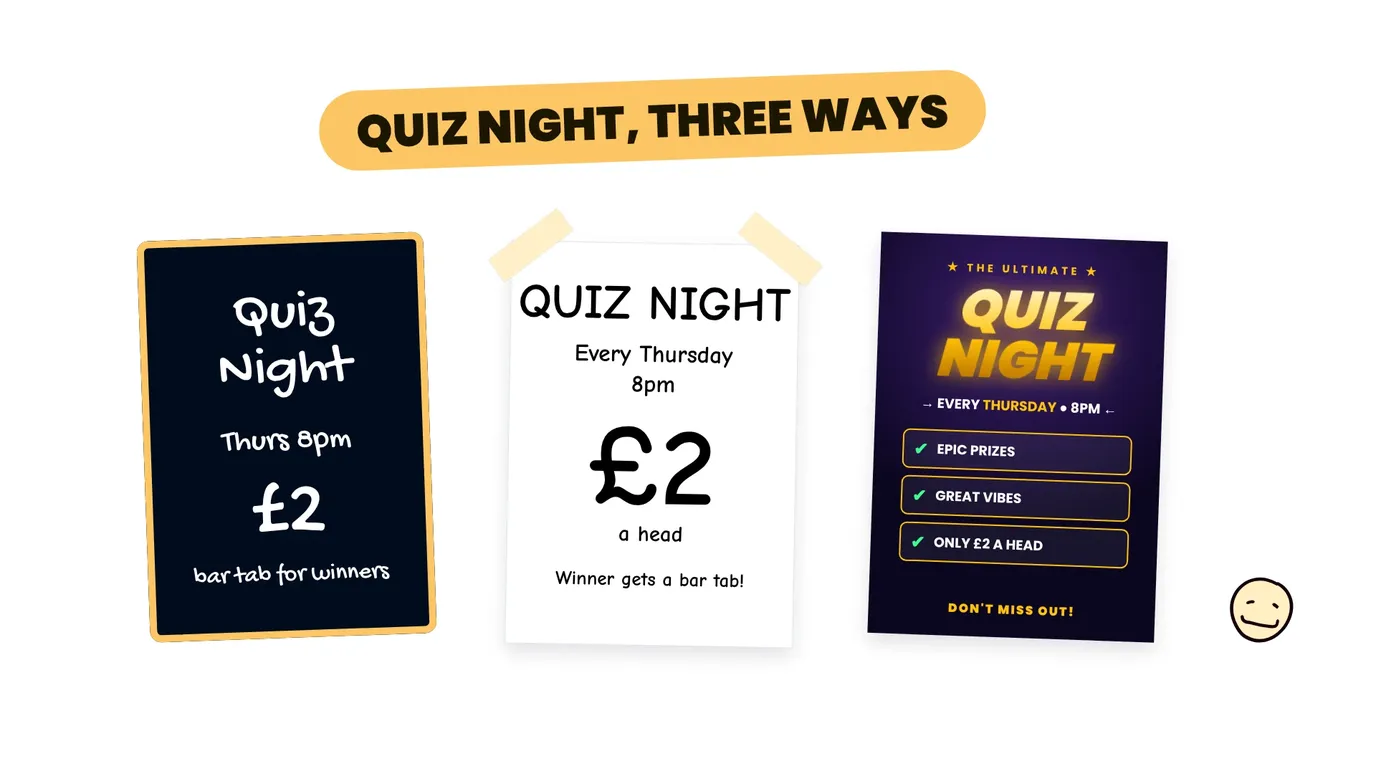
A strange thing to be annoyed about
A pub in Belfast has sworn off AI, gig posters included. A food truck in Japan apologised for an AI signboard that showed melted cheese on a dish with no cheese in it. 404 Media borrowed a line from a viral Threads post to say we are living in a "ChatGPT flyer pandemic". People are properly annoyed about posters made by small businesses, which is a strange thing to be annoyed about.
It's strange because for thirty years the alternative was a sheet of A4 in Comic Sans, sellotaped to a window. Nobody loved those. Designers (me included) laughed at them. So why does the new version, which is far more polished, make people cross?
The easy answer doesn't hold
The easy answer is that we've lost the vernacular: the chalkboard, the hand-painted sign, the local hand. Chalkboards do have charm. But the Word poster had none, and it was made with the same software as every other Word poster in the country. We didn't mourn anything when it arrived.
So the vernacular was never really in the tools, I think it was in the fact that you could trace every decision back to a person. Someone picked Comic Sans because they thought it looked friendly and then made the price 4 times bigger than the name of the event.
Bad decisions, but decisions nonetheless and they told you the truth about the business: no budget, made at the till, by the owner.
Nobody is being fooled
It's tempting to call the AI poster a fake. A fake only works if you can't spot it though and most of us can spot these from across the road: the horrid all caps font and that weird glossy veneer. Nobody is being bamboozled here mate.
I think that's what stings. The poster is an attempt to impress whilst it assumes we won't notice how little went into it (it's giving 99p sticker on the back of your birthday card). The humble Word poster never tried to impress anyone. It knew its place.
The research points the same way. Two studies in the Journal of Advertising Research found that people assume AI-made ads took less effort. One found this made luxury ads feel less authentic. The other found people were less forgiving when an AI-made ad got something wrong. In a 2026 survey of 500 consumers, the most common negative association with brands using AI was "lazy" (25%), just ahead of "less personal".
A caution, though. In the same survey, 44% said AI-made advertising would make no difference to whether they bought (41% said less likely, 15% more likely). Designers notice. Plenty of customers don't, or don't seem to mind enough to stop them buying.
We always miss the last tool
Every tool on this ladder was sneered at when it arrived, and each one showed us what was human about the one before:
Word showed us the chalkboard had a hand.
Canva showed us the Word poster had someone fumbling with fonts.
AI showed us the Canva poster had someone choosing.
Each step took away some skill but left the choosing. This one takes most of the choosing as well, and it learned from designers' work that, for the most part, nobody asked permission to use. Those two things make it feel different.
But the direction of travel is the same as it has always been.
Which puts designers in the dock
We mocked Comic Sans for twenty years and now talk about it like a lost folk art. Steven Heller wrote this year that the rough, hand-made look has itself become a professional anti-design style. Our nostalgia tends to arrive one tool late.
The owners have a case too. A cafe with four staff and thin margins was never going to hire a designer for a quiz night poster. One cafe owner told reporters that small businesses that don't use AI will be eaten up by the big ones that do. He may be right, anecdotal as it is.
So I expect that in ten years we'll miss the ChatGPT flyer. Something will replace it, probably something with no poster at all: an ad made fresh for each person looking at a screen. Then we'll remember the flyer as the last time someone picked one picture, printed it, and stuck it in their own window.
We only see the human part of a tool once the next tool removes it. The annoyance at AI posters is grief for a kind of choosing we never valued while we had it.
Written by

More insights
All insightsWe Outgrew Ours Too
We spend most of our time telling businesses they've outgrown how they look. It's a strange feeling when it's your turn.
Nobody Decides to Go Off-Brand
Every brand drifts a little each time somebody needs a post by four o'clock, and AI has made four o'clock come round a lot more often.
Headless Wordpress
Why It’s Not the Best Option for Growing Businesses